
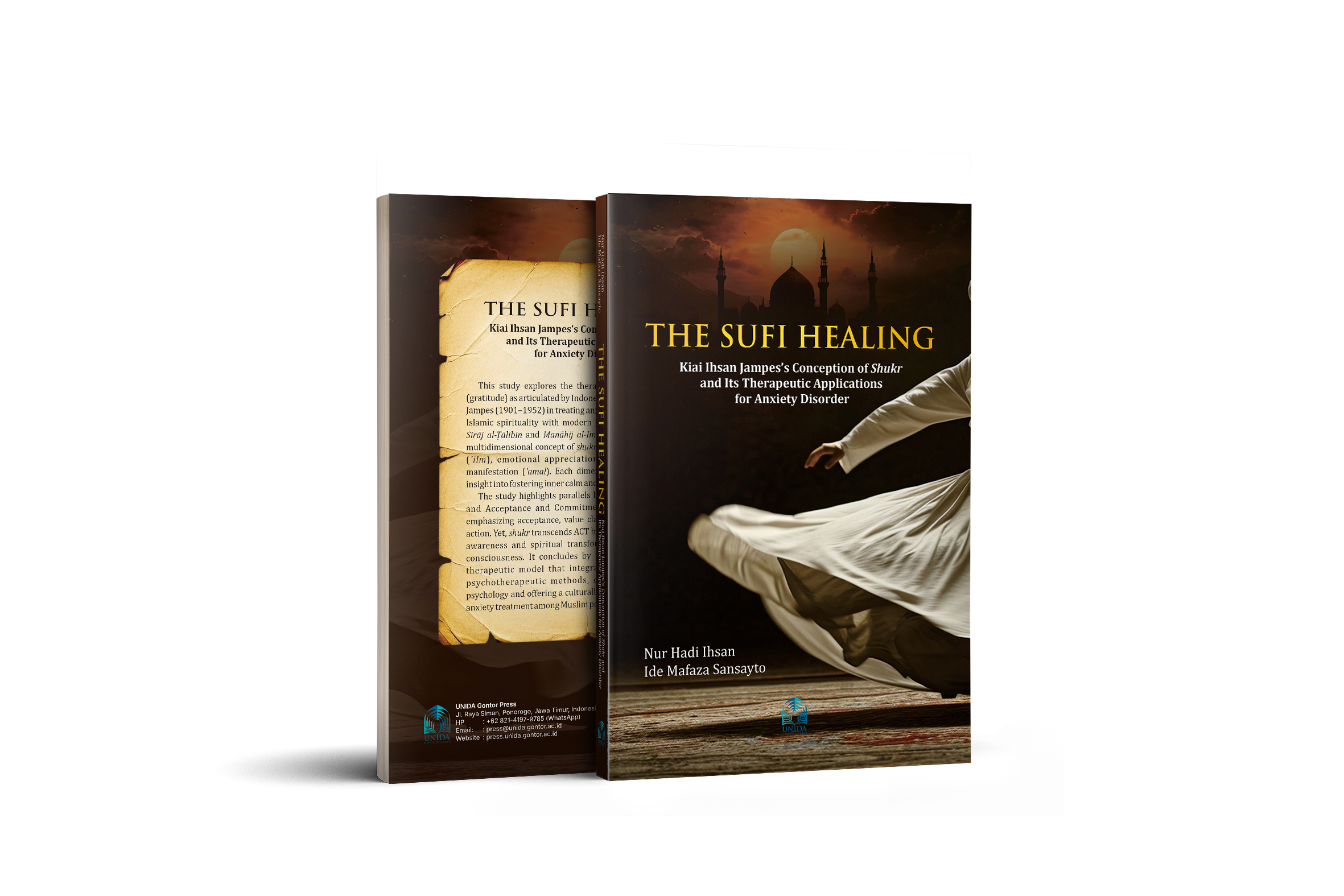
The Sufi Healing Kiai Ihsan Jampes’s Conception of Shukr and Its Therapeutic Applications for Anxiety Disorder
Description
This book examines the therapeutic potential of shukr (gratitude) conceptualized by the Indonesian Sufi scholar Kiai Ihsan Jampes (1901-1952) for treating anxiety disorders. Situated at the intersection of Islamic spirituality and psychological science, this book offers a comprehensive framework for integrating traditional Islamic wisdom with contemporary psychotherapeutic approaches.
The work begins by contextualizing the alarming global prevalence of anxiety disorders and critically evaluating the limitations of conventional treatment modalities. Against this backdrop, Kiai Ihsan Jampes is introduced as a significant yet understudied figure whose unique elaboration of shukr offers valuable resources for addressing anxiety’s psychological and spiritual dimensions.
Through meticulous analysis of Kiai Ihsan’s primary writings, particularly Sirāj al-Ṭālibīn and Manāhij al-Imdād, the study elucidates his multidimensional conceptualization of shukr. This analysis reveals that, for Kiai Ihsan, shukr encompasses not merely verbal expressions of gratitude but a comprehensive spiritual-psychological orientation involving cognitive recognition (ma’rifah), emotional appreciation (ḥal), and behavioral manifestation (‘amal). The psychological implications of each dimension are systematically explored, establishing theoretical bridges between classical Sufi psychology and contemporary understanding of anxiety disorders.
The book identifies significant parallels between Kiai Ihsan’s conception of shukr and Acceptance and Commitment Therapy (ACT), a third-wave cognitive behavioral approach with demonstrated efficacy for anxiety treatment. Both frameworks emphasize acceptance of present circumstances, mental flexibility, value clarification, and committed action. However, shukr extends beyond ACT by incorporating metaphysical dimensions often neglected in secular therapeutic approaches, including relationship with the divine, teleological meaning-making, and spiritual transformation through adversity.
Building on these theoretical foundations, the study develops a preliminary model for shukr-based anxiety intervention that integrates elements from traditional Islamic spiritual practices and contemporary psychotherapeutic protocols. This model includes specific techniques for cultivating cognitive, emotional, and behavioral dimensions of shukr, with particular attention to their application in addressing various manifestations of anxiety disorders.
The work concludes by identifying limitations in current research and outlining directions for future investigation, including the need for empirical validation of shukr-based interventions. Beyond its scholarly contributions, this book offers practical guidance for mental health practitioners seeking to develop culturally responsive, spiritually integrated approaches to anxiety treatment, particularly for Muslim populations.
By illuminating the psychological wisdom embedded in Kiai Ihsan Jampes’ spiritual teachings, this book contributes to the growing field of Islamic psychology while demonstrating the continuing relevance of traditional spiritual frameworks for addressing contemporary mental health challenges. It is an invitation to further dialogue between Islamic spiritual traditions and psychological science—a dialogue that holds significant promise for developing more holistic, culturally sensitive approaches to healing and well-being.
Specification
Additional information
| Title | The Sufi Healing |
|---|---|
| Author | Nur Hadi Ihsan |
| Publisher | UNIDA Gontor Press |



Reviews
There are no reviews yet.